
Ever ended up with oatmeal that’s too thick, too watery, or stuck to the bottom of the pot? You’re not alone! The good news is that learning how to cook rolled oats is surprisingly simple once you know the right liquid ratio and cooking time.
Whether you prefer creamy stovetop oatmeal, a quick microwave breakfast, or a no-cook option, I’ll walk you through four easy methods, including the cooking times, textures, and common mistakes to avoid.
And there’s one small trick I always use to make oatmeal extra creamy without adding cream. I’ll share it below!
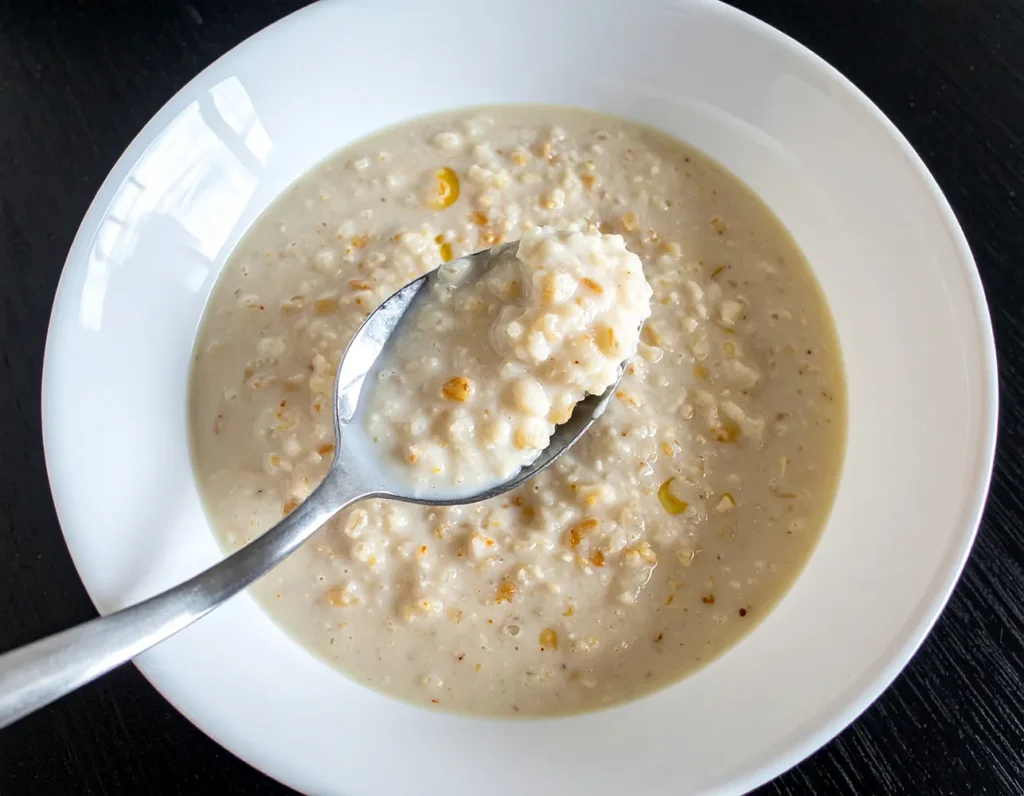
How to Cook Rolled Oats: Quick Answer
For a classic bowl of oatmeal, combine ½ cup of old-fashioned rolled oats with 1 cup of water or milk. Cook over medium-low heat for about 5 minutes, stirring occasionally, until the oats soften and the mixture becomes creamy.
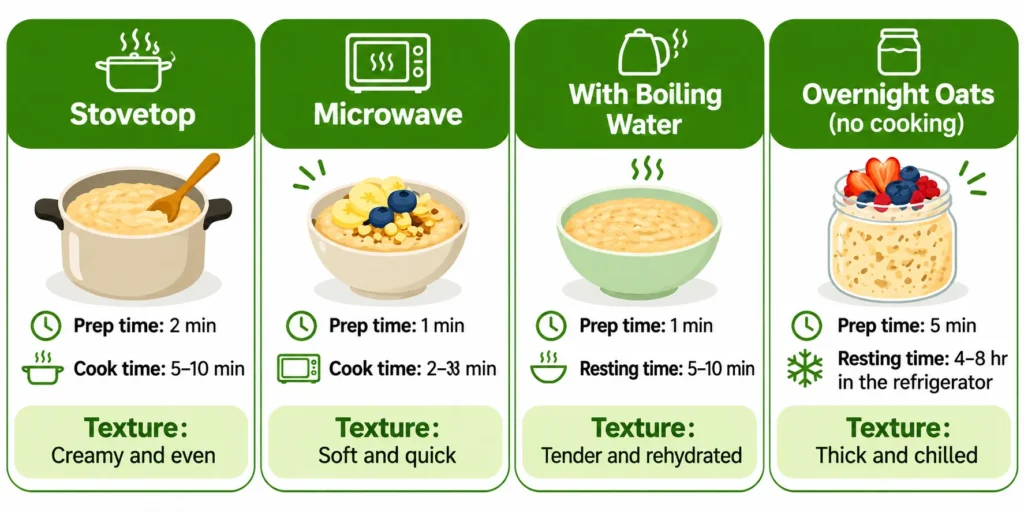
Here are four ways to prepare them:
| Method | Cooking or resting time | Texture |
|---|---|---|
| Stovetop | 5–10 minutes | Creamy and evenly cooked |
| Microwave | 2–3 minutes | Soft and tender |
| Boiling water | 5–10 minutes of soaking | Soft, with more texture |
| Overnight oats | 4–8 hours in the refrigerator | Thick, chilled, and creamy |
Times are approximate and depend on the type and thickness of the oats. Always check the package instructions.
How to Cook Rolled Oats on the Stove
Stovetop oatmeal is my favorite method when I want a warm, creamy breakfast. It gives me more control over the consistency, and it’s easy to adjust the liquid as the oats cook.
Classic Porridge Made in a Pot
Basic Recipe for 1 Person
Ingredients for One Serving
- ½ cup old-fashioned rolled oats (about 40 g)
- 1 cup milk, water, or unsweetened plant-based milk (240 ml)
- A pinch of salt (optional)
- Your favorite toppings: banana, berries, cinnamon, nuts, or peanut butter
Includes 1–2 minutes of resting time.
Step-by-Step Instructions
- Let it rest. Wait 1–2 minutes before serving. The oats will continue absorbing liquid and naturally thicken.
- Combine the oats and liquid. Add the rolled oats and milk or water to a small saucepan. Stir to distribute the oats evenly.
- Heat gently. Bring the mixture to a gentle simmer over medium heat, then reduce to medium-low. Avoid a vigorous boil.
- Stir occasionally. Cook for approximately 5–10 minutes, depending on the thickness of the oats and your preferred consistency.
- Remove from heat before it’s too thick. The oatmeal should still look slightly looser than your ideal texture.
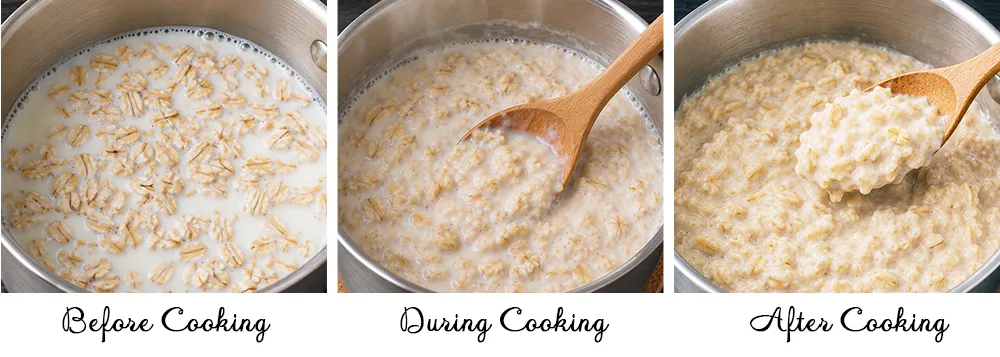
My Trick for Extra-Creamy Rolled Oats
Here’s the trick I promised: turn off the heat while the oatmeal is still a little runny.
The oats continue to absorb liquid after cooking. If you wait until the mixture looks perfectly thick in the saucepan, you may end up with oatmeal that’s too dense by the time you sit down to eat.
I also like to stir gently during the final minute of cooking to bring everything together.
For a richer consistency, use milk or an unsweetened plant-based alternative instead of water.
How to Cook Rolled Oats in the Microwave
Short on time? The microwave is a convenient way to make oatmeal without standing over the stove.
Prep time: 1 minute – Cook time: 2–3 minutes – Total time: About 4–5 minutes, including a short rest
Instructions
- Add more liquid if needed before serving.
- Add ½ cup rolled oats and 1 cup water or milk to a large microwave-safe bowl.
- Stir well.
- Microwave on high for approximately 2–3 minutes, monitoring closely to prevent overflowing.
- Stir carefully and let rest for 1 minute.
My tip: Always choose a bowl much larger than the amount of oatmeal you’re preparing. Oatmeal can bubble up quickly in the microwave, and cleaning up spilled porridge is nobody’s favorite morning activity!
For reference, Quaker Oats’ preparation guide provides stovetop and microwave instructions for different oat varieties.
How to Prepare Rolled Oats with Boiling Water
Don’t have access to a stove or microwave? You can soften rolled oats by soaking them in boiling water.
This method works especially well with thinner rolled oats or quick oats. Traditional thick rolled oats may retain more chewiness.
Prep time: 1 minute – Resting time: 5–10 minutes – Total time: 6–11 minutes
Instructions
- Place ½ cup rolled oats in a heatproof bowl.
- Pour approximately ¾–1 cup boiling water over the oats.
- Stir, cover, and let sit for 5–10 minutes.
- Stir again and adjust the consistency with additional liquid if necessary.
What to expect: The oats will soften, but the texture may be less smooth than stovetop oatmeal.
If you prefer very creamy oatmeal, I recommend cooking the oats rather than simply soaking them.
How to Make Overnight Oats Without Cooking
Overnight oats are ideal when you want breakfast ready as soon as you open the refrigerator.
Instead of heating the oats, you let them absorb liquid slowly while chilled.
Prep time: 5 minutes – Resting time: 4–8 hours – Total time: 4 hours 5 minutes to 8 hours 5 minutes
Ingredients
- ½ cup old-fashioned rolled oats
- ½ cup milk or unsweetened plant-based milk
- ¼ cup plain yogurt (optional, for a thicker consistency)
- Cinnamon or vanilla to taste
- Fruit or other toppings
Instructions
- Combine the oats, milk, and optional yogurt in a jar.
- Stir until everything is evenly mixed.
- Cover and refrigerate for at least 4 hours, preferably overnight.
- Stir before serving, adding a splash of milk if the mixture is too thick.
Unlike hot oatmeal, overnight oats are served cold, although you can warm them gently if you prefer.
My tip: Start with a 1:1 ratio of oats to milk, then adjust according to your preferred texture. Yogurt will make the mixture thicker.
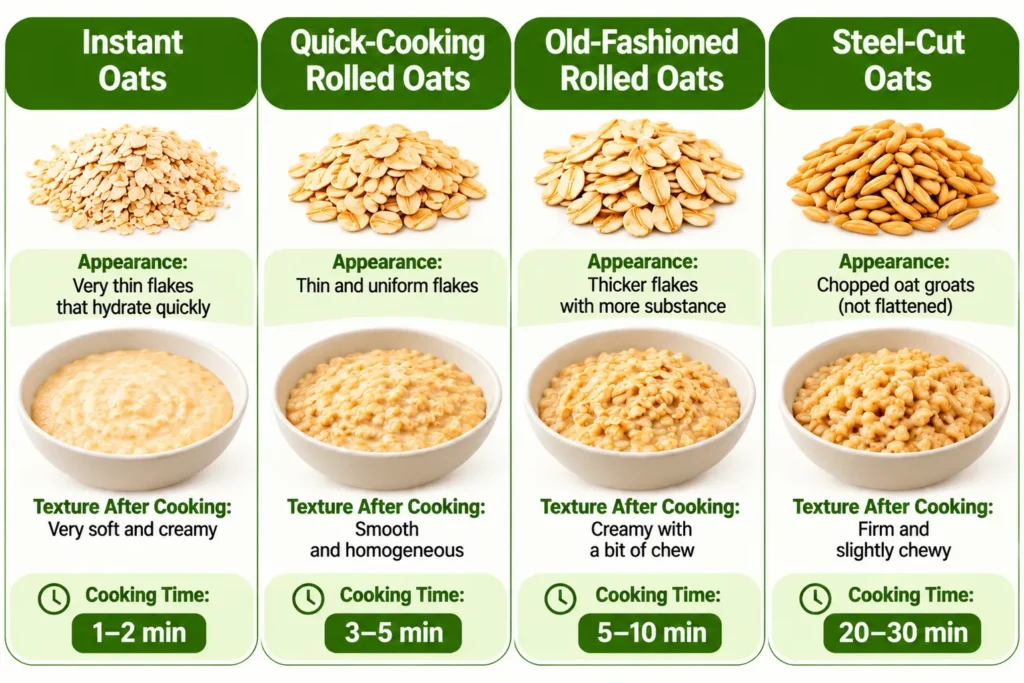
How Long Do Different Types of Oats Take to Cook?
Not all oats are created equal! Their thickness and processing affect both cooking time and texture.
| Type of oats | Average stovetop cooking time | Texture after cooking |
|---|---|---|
| Instant oats | 1–2 minutes | Very soft and smooth |
| Quick-cooking rolled oats | 3–5 minutes | Soft and creamy |
| Old-fashioned rolled oats | 5–10 minutes | Creamy with some chew |
| Steel-cut oats | 20–30 minutes or longer | Firm and chewy |
What’s the Difference Between Rolled Oats and Steel-Cut Oats?
Rolled oats are oat groats that have been steamed and flattened into flakes. This processing helps them cook relatively quickly.
Steel-cut oats, on the other hand, are oat groats cut into smaller pieces rather than flattened. They generally require more cooking time and retain a firmer, chewier texture.
Instant and quick oats undergo additional processing, which allows them to soften faster.
For more information on oat processing and nutritional differences, see Harvard T.H. Chan School of Public Health’s guide to oats.
Which should you choose? For everyday creamy oatmeal, I recommend old-fashioned rolled oats. They offer a nice balance of convenience and texture.
Is It Better to Cook Rolled Oats with Water or Milk?
Both options work well. The best choice depends on the texture and flavor you’re looking for.
| Cooking liquid | Result | Best for |
|---|---|---|
| Water | Lighter flavor, less richness | Simple oatmeal with toppings |
| Dairy milk | Creamier, richer taste | Classic creamy oatmeal |
| Oat milk | Mild, naturally oat-forward flavor | Dairy-free oatmeal |
| Almond milk | Light texture and subtle nutty flavor | A lighter-tasting bowl |
| Half water, half milk | Balanced richness and consistency | Everyday oatmeal |
Personally, I often use a combination of water and milk. It gives me a creamy result without making the oatmeal feel too rich.
What’s the Best Rolled Oats-to-Water Ratio?
For old-fashioned rolled oats, a useful starting point is:
This is a common starting ratio for traditional oatmeal, also reflected in Quaker Oats’ cooking instructions.
For thicker oatmeal, use slightly less liquid. For a softer, looser consistency, add a little more.
5 Common Mistakes When Cooking Rolled Oats
Even a simple bowl of oatmeal can go wrong. Here are five mistakes I try to avoid.
1. Cooking Over High Heat
High heat can make oatmeal bubble aggressively, stick to the bottom of the pan, or thicken unevenly.
My solution: Reduce the heat once the liquid begins to simmer.
2. Using Too Little Liquid
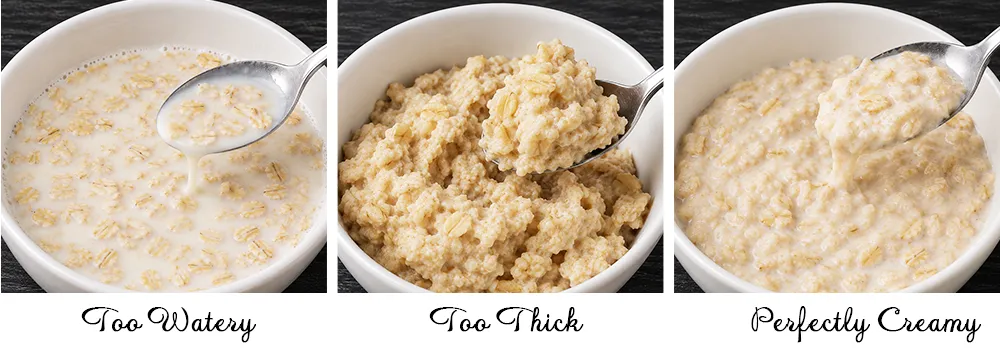
Not enough water or milk can turn your oatmeal into a thick, compact mixture.
My solution: Begin with the standard ratio, then adjust gradually.
3. Adding Too Much Liquid
An excessive amount of liquid can leave the oats floating in a thin, soupy mixture.
My solution: Let the oats cook a little longer, stirring gently, or reduce the liquid next time.
4. Forgetting That Oatmeal Thickens After Cooking
This is probably the most important mistake to avoid.
Oatmeal continues absorbing liquid as it cools, so a perfectly thick mixture in the saucepan can become too dense in the bowl.
My solution: Remove it from the heat slightly before it reaches your ideal consistency.
5. Using the Same Cooking Time for Every Type of Oat
Instant oats and steel-cut oats have very different cooking requirements.
My solution: Check the type of oats you’re using before following a recipe.
Frequently Asked Questions About Cooking Rolled Oats
1. Do Rolled Oats Need to Be Cooked?
No. Rolled oats are typically steamed during processing and can be eaten without additional cooking. You can soften them by soaking them in milk or water, as in overnight oats.
Cooking is mainly useful for achieving a warm, tender texture.
2. How Long Should I Cook Rolled Oats?
Old-fashioned rolled oats generally take about 5–10 minutes on the stove or 2–3 minutes in the microwave. Exact times vary by product and cooking method.
3. Can I Cook Rolled Oats with Just Water?
Absolutely! Water works perfectly well. You can add milk, yogurt, fruit, or nut butter afterward if you’d like a richer flavor.
4. Should I Stir Oatmeal While Cooking?
Yes, occasionally. Stirring helps prevent sticking and encourages even cooking. You don’t need to stir constantly.
5. Can I Reheat Cooked Oatmeal?
Yes. Store cooked oatmeal promptly in a covered container in the refrigerator and reheat until steaming hot. Add a splash of water or milk to loosen the texture.
6. Can I Make Rolled Oats Ahead of Time?
Yes. You can prepare overnight oats in advance or cook a batch of oatmeal and refrigerate individual portions for convenient breakfasts.
7. Are Rolled Oats the Same as Oatmeal?
Not exactly. Rolled oats describes the flattened oat flakes, while oatmeal commonly refers to the prepared dish in American English. However, the terms are sometimes used interchangeably in everyday conversation.
My Final Tips for Perfect Rolled Oats
Cooking rolled oats doesn’t have to be complicated. Once you’ve found the right ratio and cooking time, it’s easy to prepare a bowl that suits your taste.
For a traditional hot breakfast, I recommend the stovetop method. When I’m short on time, the microwave is convenient. And when I want breakfast ready in advance, overnight oats are hard to beat.
But whichever method you choose, remember my favorite tip: stop cooking before the oatmeal becomes too thick. That short resting time can make all the difference.
And you, how do you cook rolled oats to get your favorite texture? Do you prefer thick and hearty oatmeal, a soft and creamy bowl, or something in between? Share your method in the comments!
Sources and References
These references provide additional information about oat varieties, preparation methods, and typical cooking times.
Bob’s Red Mill — Quick Cooking Rolled Oats — Preparation instructions for quick-cooking oats.
Quaker Oats — How to Prepare Oats — Standard oatmeal ratios and cooking instructions.
Harvard T.H. Chan School of Public Health — Oats — Oat processing, varieties, and nutritional characteristics.

Passionate about healthy recipes and natural oat-based care.
I share simple, practical content to support a healthy body, balanced nutrition, and low-sugar habits.